Insights
ANTA did not just buy brands. It designed new growth territories.
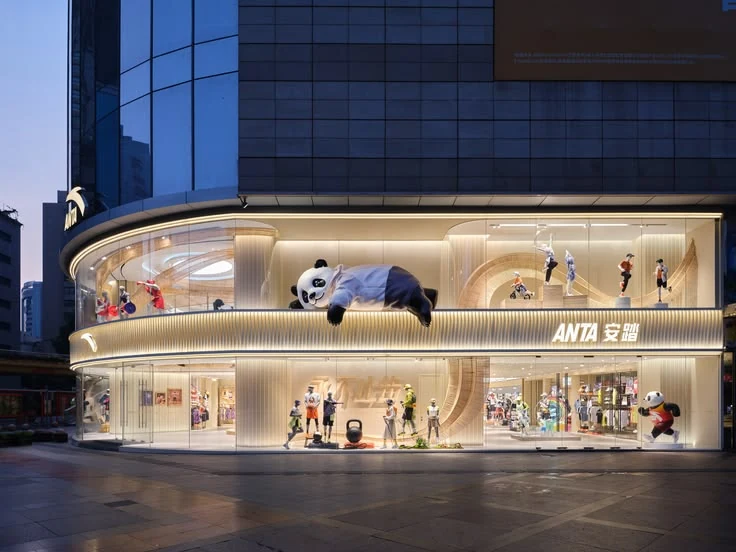
The short case
Most companies ask the same growth question:
How do we sell more?
ANTA's story becomes more useful when we ask a different one:
Where should the next growth come from?
That question changes the unit of strategy. Instead of stretching one brand across every consumer and category, ANTA built a multi-brand portfolio in which different identities can address different territories.
ANTA serves the performance core. FILA reaches sports fashion and premium lifestyle. DESCENTE and KOLON SPORT extend the system into technical performance and outdoor demand. Through an ANTA-led consortium's 2019 acquisition of Amer Sports, the wider ecosystem gained access to global brands including Arc'teryx, Salomon, Wilson, Peak Performance, and Atomic.
The portfolio is not interesting because it contains famous logos. It is interesting because each brand can become a different door into demand.
The wardrobe is actually a market map
Imagine opening one changing room and finding six completely different objects: a FILA tracksuit, a DESCENTE ski jacket, a Salomon trail shoe, an Arc'teryx shell, a Wilson racket, and a Peak Performance outerwear piece.
It looks like a sports-fashion wardrobe. Strategically, it is a map of six brand worlds:
- FILA translates sport into high-end fashion and lifestyle identity.
- DESCENTE turns technical performance into premium design and craftsmanship.
- Salomon begins with trail and winter-sport credibility. N/EL's interpretation is that this authentic utility gives its design language permission to move into city culture.
- Arc'teryx begins with mountain performance and meticulous construction. Its cultural value is strongest when the mountain remains the proof behind the signal.
- Wilson owns sporting objects and rituals across court and field, then extends them into lifestyle/performance apparel and functional fashion.
- Peak Performance connects Swedish freeride heritage with outerwear, streetwear, and everyday city use.
That creates a more useful formula than “sport is fashionable”:
Performance creates the proof. Design makes the proof visible. Culture gives the proof new occasions.
The six brands do not need to sound alike. Their strategic power comes from entering culture through different roots.
The hidden mechanism: designed adjacency
N/EL calls the mechanism designed adjacency.
Designed adjacency connects six choices:
- Which consumer tension should we solve?
- Which category or geography contains the opportunity?
- Which brand has permission to enter?
- Which capability is missing?
- Should we build, partner, or acquire it?
- What becomes more valuable when the pieces connect?
This is more disciplined than diversification. The objective is not to own more. It is to enter a new territory credibly and make it stronger through the system.
The portfolio has become economically material
ANTA reported 2025 revenue of RMB80.22 billion, up 13.3% year on year. ANTA segment revenue reached RMB34.75 billion, FILA reached RMB28.47 billion, and all other brands reached RMB17.00 billion. That last group grew 59.2% year on year.
The core remains essential, but the faster-growing other-brand segment shows why multiple engines matter. A mature company does not have to choose between defending its core and exploring new demand if the portfolio roles and operating system are designed clearly.
The PUMA move needs precise language
On 27 January 2026, ANTA announced an agreement to acquire a 29.06% stake in PUMA for EUR1.5 billion. The transaction is expected to close by the end of 2026, subject to approvals and closing conditions. Upon closing, ANTA would become PUMA's largest shareholder.
ANTA stated that it intended to preserve PUMA's identity, autonomy, and governance and had no current plan to make a takeover offer. This is strategically important. The value may not come from making PUMA behave like ANTA. It may come from preserving what PUMA uniquely means while connecting selected capabilities and market strengths around it.
What leaders should learn
The lesson is not "acquire more brands." Acquisition is only one entry mode, and it brings capital, integration, and governance risk.
The more useful lesson is:
Growth can be designed as a portfolio of territories, but only when identity stays clear and capabilities genuinely connect.
Before expanding, leadership teams should ask:
- What is the growth ceiling of our current brand?
- Which consumer or category tension deserves a new answer?
- Do we have permission and capability to enter?
- Is building, partnering, or acquiring the most credible route?
- What should remain autonomous?
- What measurable advantage will the connection create?
The first look at ANTA is a sportswear business with many brands. The second look is a company designing multiple pathways into demand.
That is the shift: do not simply grow the brand. Design the next growth territory.
CTA
N/EL helps leadership teams identify where the next opportunity lives, which capabilities it requires, and how to turn separate assets into a coherent growth system.
Strategy. Experience. Growth.
Sources
- N/EL, ANTA Short Study Case, 2026.
- ANTA 2025 annual-results release.
- ANTA proposed PUMA stake announcement.
- ANTA 2023 interim-results release.
- ANTA multi-brand strategy.
- Amer Sports brands and official pages for Salomon, Arc'teryx, Wilson, and Peak Performance.
Editorial note: Design thinking and designed adjacency are N/EL interpretations. Confirm the PUMA transaction status before publication.
Next in News
See all →
Every recommendation must work across five lenses.
Mind, Future, Experience, Business, Action. If a direction fails one lens it is not ready to become a recommendation.
Read →
We begin with the decision leadership needs to make.
Why we shape every engagement around a decision rather than a volume of slides, and what that changes in the first week.
Read →
Make AI useful in the work people already do.
A founder-experience case from a multi-brand consumer group. How teams moved faster with AI without lowering the quality of the work.
Read →