Case notes
Make AI useful in the work people already do.
The challenge
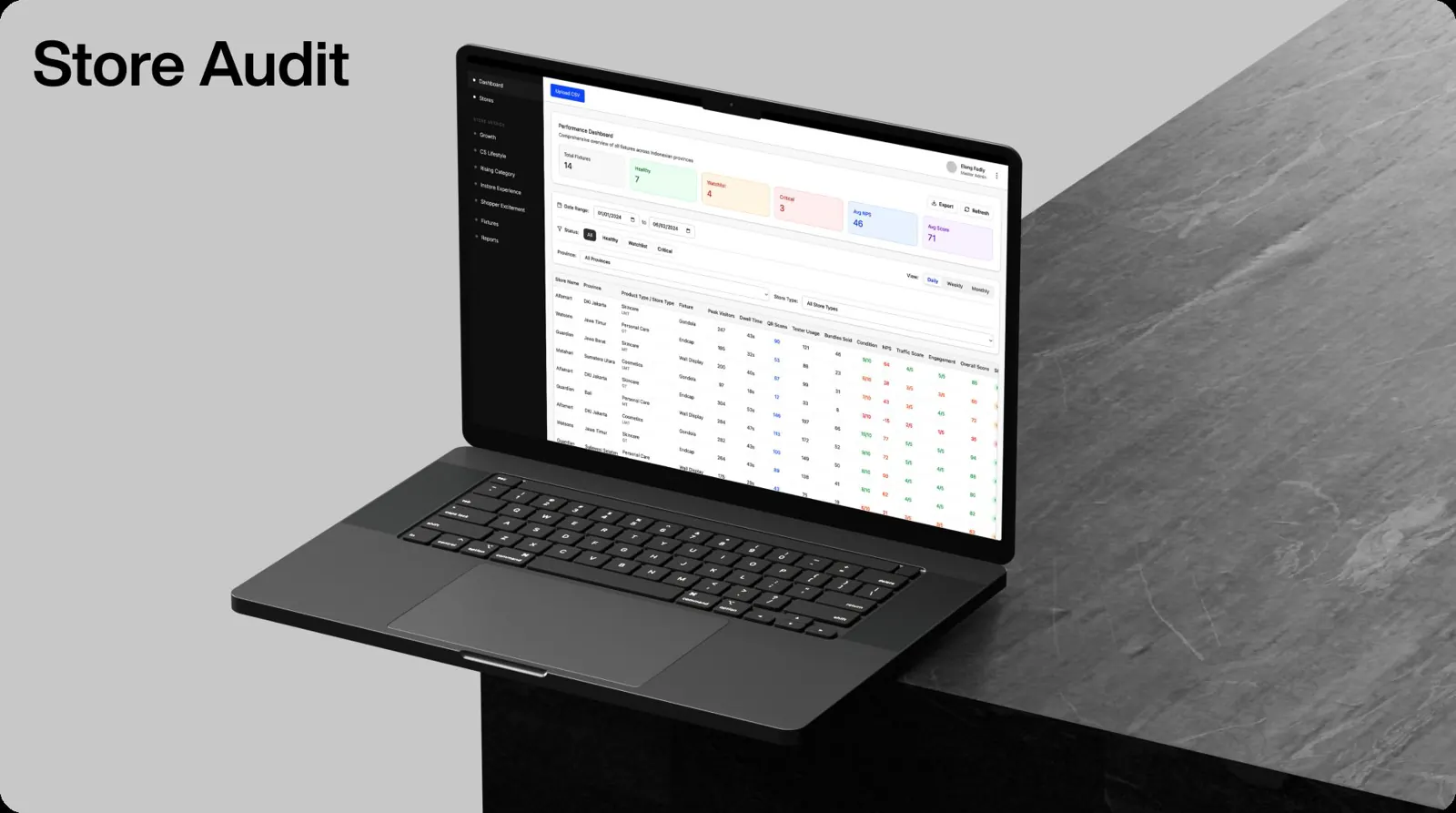
Inside a multi-brand consumer group, teams were being asked to move faster with AI. The tools were available. The question nobody had answered was how to use them without lowering the quality of the work, or quietly moving responsibility for judgment onto a model.
The strategy
Focus AI on repeatable daily tasks. Keep people responsible for judgment. Build quality checks into the workflow rather than around it.
That framing matters. It turns AI from a project into an operating habit, and it keeps the humans where the accountability already sits.
The operating loop
- Daily work. Start from tasks people already do every week, not from what the technology can do.
- AI acceleration. Use models for the repeatable parts: first drafts, variants, structure, summaries.
- Human judgment. People decide what is true, what is on brand, and what ships.
- Quality output. Checks are part of the flow, so speed does not erode the standard.
The result
A practical daily AI approach designed to accelerate the path from task to output while keeping human judgment and quality standards in control.
No unverified performance metrics are asserted. The proof here is the operating strategy: faster work, quality in control.
What we took from it
The most useful AI strategies we have seen are boring on purpose. They pick a small number of daily tasks, define who is responsible for the judgment call, and make the quality check visible. Everything ambitious can be built on top of that.
Next in News
See all →
The 90-day validation horizon.
Why we ask whether an organization can test or begin a direction within 90 days, and what it does to the quality of strategy.
Read →
N/EL Partners is established.
A newly formed strategic experience partnership built around two complementary founder lenses, human understanding and future possibility.
Read →
ANTA did not just buy brands. It designed new growth territories.
What ANTA's portfolio, Amer Sports investment, and proposed PUMA stake teach leaders about designing the next territory for growth.
Read →