Insights
Why the Future Keeps Looking Familiar
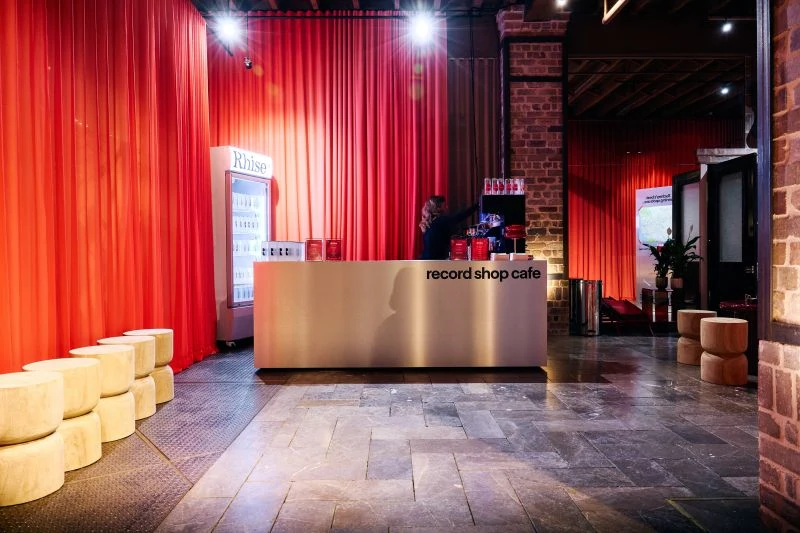
Campaign photography: Amplify / lululemon, via Amplify’s Sydney activation account. Individual photographer not named.
Introduction: When Familiar Objects Create New Excitement
What happens when companies selling the future reach for objects from the past?
A pocket companion, a Game Boy-like handheld, a fashion label’s MP3 player, and a personalized record sleeve offer a useful starting point. Meta, OpenAI, SKYLRK, and lululemon approach these formats from different business contexts. Together, they suggest an opportunity to connect familiar cultural references with contemporary participation and self-expression.
This case study examines that opportunity through Design Thinking. The central question is how a brand can turn recognition into an experience people want to join, remember, and return to. Nostalgia is one possible entry point; the business value depends on what people can actually do.
1. Empathize: Understanding the Audience Beyond Nostalgia
The first principle of Design Thinking is empathy: understanding people’s motivations, habits, and emotional needs.
An older format can mean different things to different audiences. Someone who remembers portable music players may associate one with an earlier stage of life. A younger shopper may find the same object unfamiliar, distinctive, or appealing as an accessory. These are hypotheses to investigate rather than universal generational truths.
The useful questions concern the present: What does the audience want to feel? What do they want to express? What would make this occasion more personal?
For a runner, the answer may involve motivation and belonging. For a fashion customer, it may involve taste. For a developer trying an AI capability, it may involve the satisfaction of making something work.
Business insight
A familiar reference becomes strategically useful when it connects to a current audience need. Research should identify that need before choosing the decade or object.
2. Define: Reframing the Retro Design Problem
A conventional brief might ask how to make a product or campaign look nostalgic. A more useful question is:
How might we use a familiar ritual to help people experience something new, express themselves, and create a reason to reconnect with the brand?
N/EL describes this mechanism as familiar ritual, personal meaning. A recognizable format suggests an action. Participation gives that action a personal story. A keepsake or recurring occasion can carry the story beyond the encounter.
Familiar cue → Meaningful action → Personal memory → Reason to reconnect
This is an analytical framework, not a proven law of consumer behavior. Each transition needs to work in practice. A recognizable object may attract attention without encouraging participation; a memorable experience may still fail to create a worthwhile purchase or return visit.
The shift is from selecting a retro aesthetic to designing a useful customer interaction.
3. Ideate: Different Brands Give Familiar Formats Different Jobs
Meta’s September 2026 Connect recap introduced Muse Charm as a pocket device for interacting with Muse through real-time voice. Independent reporting described a keychain-sized handheld. [1, 2] Its Tamagotchi-like appearance is a comparison, not a Bandai product relaunch. The strategic possibility is approachability; the alternative explanation is simply more convenient access to an assistant.
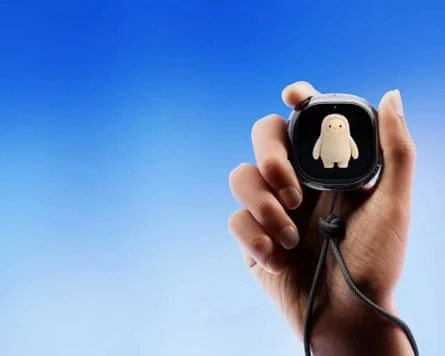
Image credit: Meta, supplied product image via The Guardian. Muse Charm is the product name; Tamagotchi describes the resemblance.
The Game Boy-like handheld that appeared around OpenAI DevDay 2026 can now be identified more precisely: ModRetro’s Chromatic. OpenAI’s official collaboration page confirms that its handheld hardware is paired with Codex for game creation. ModRetro’s DevDay Edition guide documents a workflow for making a game, testing it in an emulator, and writing it to a physical cartridge. [18, 19]
That gives the familiar object a current job: someone can become a maker as well as a player. The point is the transition from an idea to a game they can hold and play. This is a ModRetro collaboration, not a new Nintendo Game Boy. The sources establish the creation workflow; they do not establish broad adoption or commercial success.
A distinct predecessor is OpenAI’s ArcadeGPT installation at DevDay 2025: two arcade cabinets let attendees remix games with GPT-5. [3] In both examples, a recognizable play format makes a technical capability tangible.
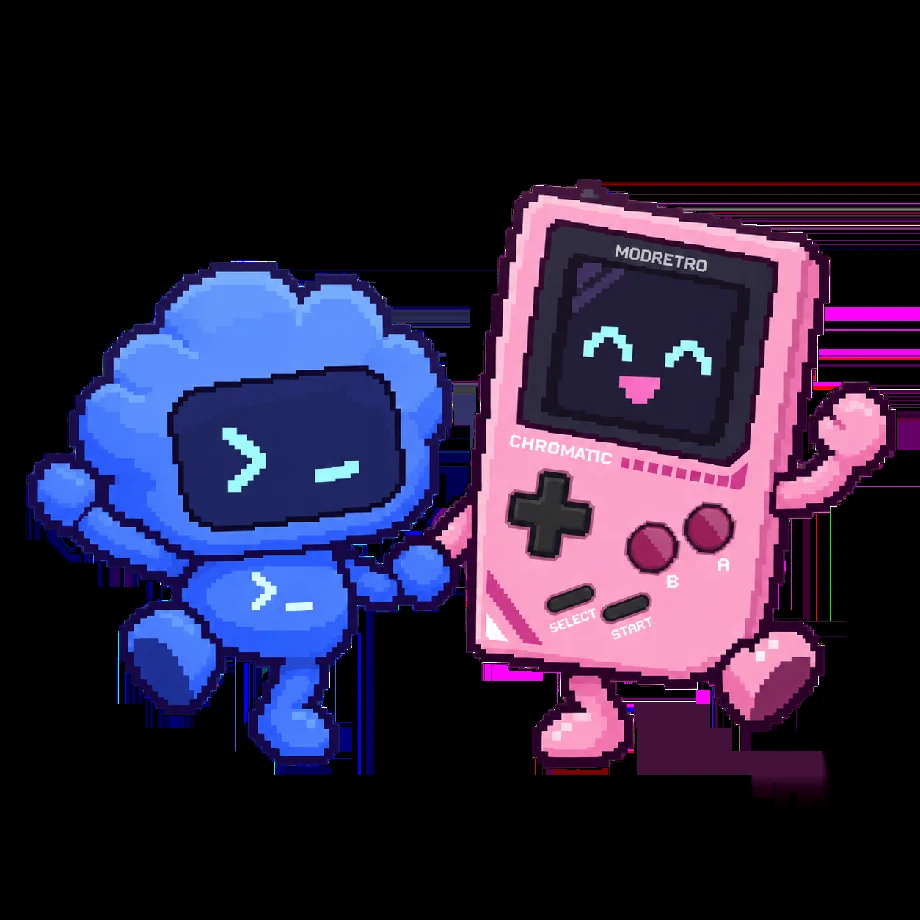
Illustration credit: OpenAI / ModRetro. Official collaboration artwork, not a photograph of the DevDay giveaway.
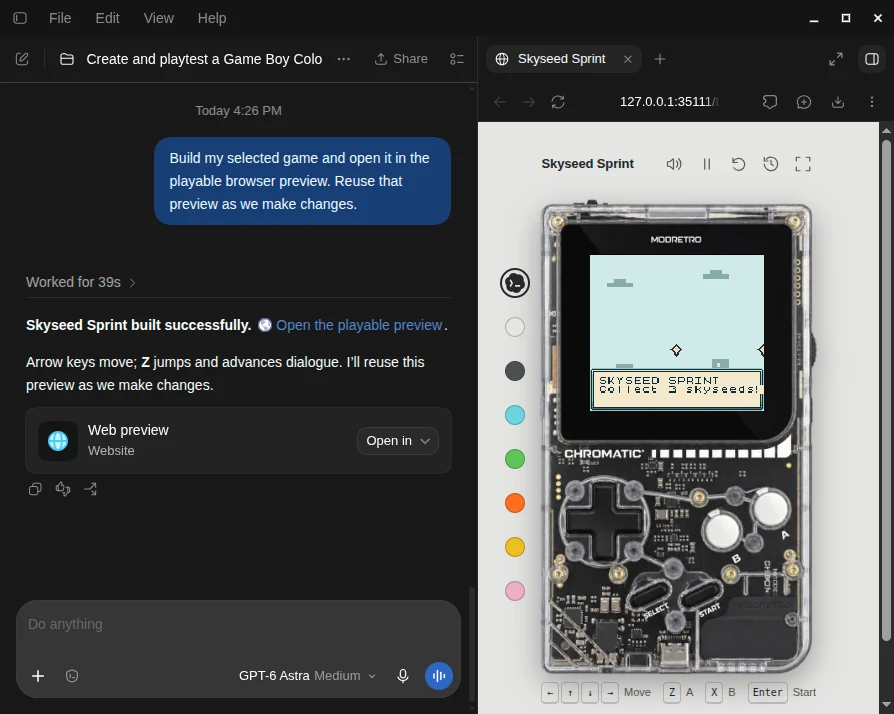
Screenshot credit: ModRetro, from the DevDay Edition guide. The screen documents the creation and playtesting workflow.
Justin Bieber’s SKYLRK previewed a Y2K-style MP3 player, glowing wired earbuds, and headphones in August 2026. [13, 14] The reviewed coverage establishes a preview, not confirmed shipping, pricing, or sales. An MP3 player is digital technology even when its design feels retro.
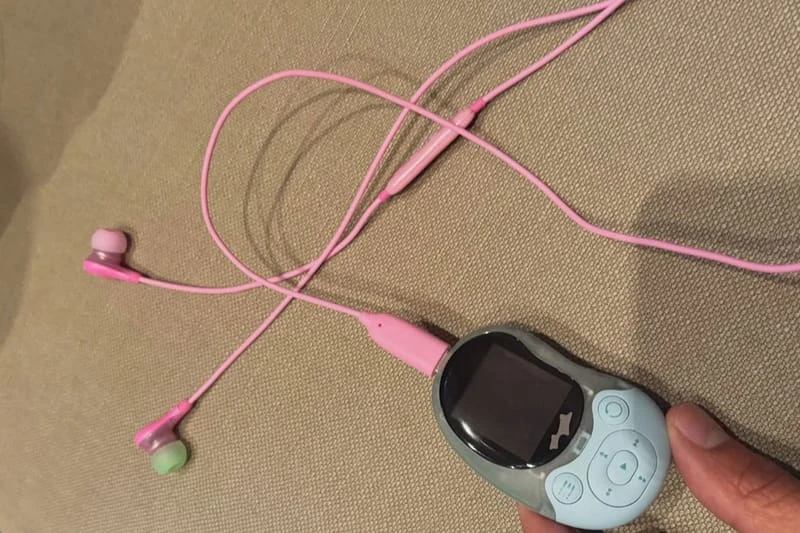
Image credit: Justin Bieber / SKYLRK, as credited by Hypebeast. The original preview was shared by @lilbieber. This is a preview, not evidence of a commercial release.
SKYLRK adds a fashion perspective: a familiar technology format can become a visible expression of taste. Its potential value includes how it looks, how it is carried, and how it connects music with personal style. Celebrity exposure and novelty could also explain attention.
Business insight
Technology companies, fashion labels, and retailers can use older formats for different purposes: access, trial, identity, or community. The purpose should determine the experience.
4. Prototype: lululemon’s Record Shop and Print Shop
lululemon’s Sydney activation makes the opportunity tangible. Its campaign site lists the Record Shop in Darlinghurst on August 28–30, 2026, and a separate Print Shop at Pitt Street Mall on August 26–30. [4]
The supplied Instagram post by Sam / @directorofsocial highlights the two experiences and credits @lululemonausnz for the visuals. [15] Amplify’s Jonathan Emmins describes guests creating a personal running record through a sleeve centered on their mantra, alongside music and community programming. [16]
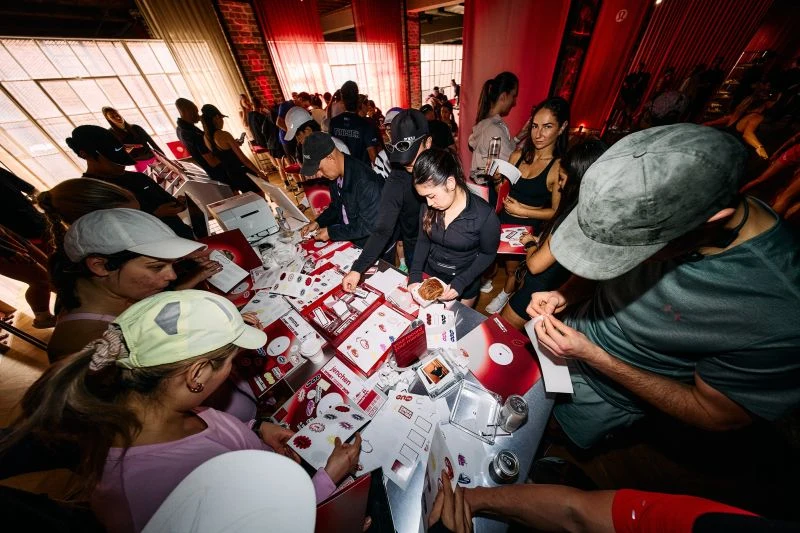
Campaign photography: Amplify / lululemon, shared by Amplify. The source does not name an individual photographer.
The creative connection is the double meaning of record: runners have personal records; music has physical records. A sleeve gives a runner’s motivation or experience a form they can personalize and keep. This interpretation explains the fit between the object and the occasion without assuming every participant feels nostalgic about vinyl.
The two spaces also had distinct roles. The campaign FAQ says the Record Shop did not sell products. The Print Shop applied Sydney graphics to eligible newly purchased apparel. [4] One offered community participation; the other made a purchase specific to race week.
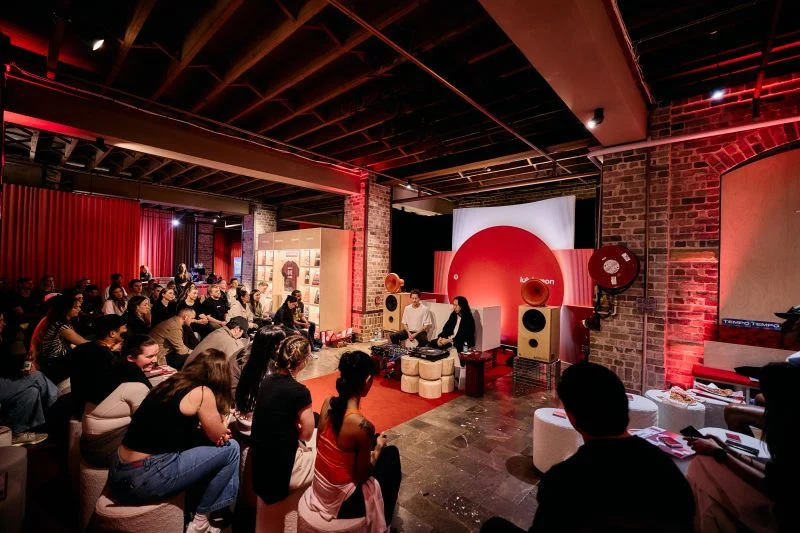
Campaign photography: Amplify / lululemon, via Amplify’s Sydney activation account.
Why this matters
The concept translates a running identity into both a personal keepsake and an optional product experience. It gives the brand a role in the participant’s story.
The documented keepsake is a customized record sleeve. Playable custom vinyl is not established by the campaign site or delivery-side account. An independent event listing corroborates the activation, but the reviewed sources do not demonstrate incremental sales or lasting loyalty. [17]
5. Test and Iterate: From Excitement to Business Learning
Design Thinking does not end when an activation attracts attention. Brands need to understand whether the experience creates value for participants and whether it works commercially.
For a lululemon-style concept, useful questions include whether people keep the item, remember the brand’s role, return to community activities, or choose a relevant product. These outcomes should be measured separately. Participation is not automatically purchase intent.
The supplied Instagram post includes appreciation and an anecdotal report of a long queue. [15] These comments can identify questions for research, but they are not representative evidence of satisfaction or operational performance.
A practical pilot could compare the current experience, a familiar visual theme with a standard keepsake, and the same theme with a meaningful choice and personalized keepsake. Assign comparable sessions, maintain consistent product and pricing, and record additional labor and material costs.
Observe return behavior over a defined window, such as 30 days, and set the required sample from baseline traffic before launch. A small pilot may establish feasibility rather than a reliable commercial effect. Expand only when the agreed contribution-margin hurdle is met and service quality holds.
6. The Business Model: Familiar Culture as a Brand Experience
The commercial opportunity takes several forms. A collectible can create a purchase occasion; a gathering can give people a reason to visit; an archive can provide a recognizable story for a new product. These routes should not be treated as interchangeable.
McDonald’s announced its Collector’s Edition cups in 2024 across more than 30 countries, drawing on references including a 1976 Grimace mug, 1999 Barbie collectible, and Shrek the Third from 2007. [5] Collection may encourage repeat visits, while scarcity, licensed characters, and bundle value remain competing explanations.
Record Store Day’s 2025 special releases brought physical music discovery into a shared shopping occasion. The organizer’s list and a participating retailer’s guide document that format. [6, 7] The value proposition combines a destination, a social calendar, and an object to take home.
Levi’s REIIMAGINE campaign with Beyoncé revisited the 1985 Launderette commercial. [8, 9] Here, an archive becomes a platform for contemporary cultural expression.
Netflix’s February 2025 MGM Grand dining residency included a Bridgerton-inspired tea service. [10] This is adjacent evidence: an imagined historical world and an older social ritual can invite participation without personal memories of that period.
Heineken, Bodega, and HMD’s 2024 Boring Phone used early-2000s styling and reduced connectivity to encourage presence on nights out. [11] Its purpose differs from Meta’s easier AI access. A similar-looking object can support a very different business idea.
7. What Makes This Relevant to Modern Brand Strategy?
The common opportunity is to give familiar culture a relevant role in contemporary life.
A brand can help people become players, makers, collectors, curators, or participants in a shared occasion. The object gives the interaction a recognizable form; the person’s contribution gives it meaning.
SKYLRK illustrates how that meaning can involve identity and style. lululemon illustrates how it can involve an achievement, intention, or community. Neither requires the brand to compete on technological novelty alone.
This perspective also sets a useful boundary. An attractive object cannot compensate indefinitely for poor product quality, excessive waiting, or an unclear purpose. A teaser can generate curiosity without demonstrating durable demand.
N/EL’s Mind × Future lens connects the two sides: understand the human motivation, then use current capabilities for customization, production, or interaction to serve it. The technology should make the experience easier to participate in or more personally relevant.
8. Design Thinking Lessons Across Industries
The opportunity is to translate the mechanism into each brand’s own context. The following are proposed concepts, not existing programs or proven results.
F&B
Let guests build a tasting combination around a familiar flavor, name it, and keep a recipe card. Connect the card to a future tasting or product purchase. Test contribution margin and repeat visits.
Music
Create a listening session where fans add a dedication to a numbered sleeve or card. Give them a reason to attend the next session. Measure paid return attendance and keepsake retention.
Media
Let audiences choose a story path or headline and create a small personal edition. Continue that choice in a later release. Measure continued reading, viewing, or paid conversion.
Fashion
Use a credible archive detail or craft collaboration that shoppers can personalize. Track full-price conversion, customization costs, returns, and continued wear.
Commercial Campaigns and Retail
Make a product benefit playable through a short challenge, then give participants a useful record of their result connected to a product or appointment. Measure qualified trial and assisted purchase.
For Indonesian audiences, investigate locally meaningful references rather than importing a decade unchanged. A neighborhood snack ritual, radio dedication, or rental-game gathering could be an interview prompt; none should be assumed to represent everyone’s experience.
9. The Takeaway
The relevant question is not simply which old object a brand should bring back. It is what that object allows people to feel, do, express, and remember today.
Design Thinking provides a practical sequence: understand the audience, define the desired behavior, explore formats, create a tangible prototype, and test the result.
The benchmark cases demonstrate different experience designs, not a universal formula for growth. Their commercial implications remain choices and hypotheses to evaluate against customer behavior and operating costs.
Conclusion: From Familiar Objects to Personal Meaning
A music player can express taste. A record sleeve can hold a running story. A game can make a technical capability understandable.
The opportunity across fashion, F&B, music, media, and retail is to create a current reason to care about a familiar form. Recognition opens the door; meaningful participation gives people a role inside the experience.
The most useful thing to bring back is a reason to take part.
References
Research developed on 30 September 2026; key cases and visual sources rechecked for this web edition on 5 October 2026. The web edition uses Sydney’s completed lululemon activation and updates the previously unverified handheld observation with OpenAI and ModRetro’s primary records.
1. Meta | The Biggest News From Connect 2026 (24 Sep 2026) — Primary: Muse Charm announcement and intended interaction; not adoption results.
2. Axios | Meta debuts Muse Charm (23/24 Sep 2026) — Independent countercheck of the keychain-sized handheld announcement.
3. OpenAI | How Codex ran OpenAI DevDay 2025 — Primary: two ArcadeGPT cabinets and GPT-5 game remixing; distinct from 2026.
4. lululemon | Sydney Record Shop and Print Shop 2026 — Primary campaign site: dates, locations, sleeve activity, community hub and apparel eligibility.
5. McDonald’s | Collector’s Edition Cups (7 Aug 2024) — Primary: launch scope and historical references; no causal sales estimate used.
6. Record Store Day Canada | Official 2025 list — Primary organizer: April 12 special releases through record stores.
7. Plaid Room Records | Record Store Day 2025 guide — Participating retailer countercheck; not an independent impact evaluation.
8. Levi Strauss & Co. | Beyoncé campaign (Sep 2024) — Primary: REIIMAGINE and the 1985 Launderette reference.
9. Retail Dive | Levi’s gets nostalgic with Beyoncé — Independent campaign countercheck; no isolated nostalgia effect established.
10. Netflix | Netflix Bites Is Now Open (11 Feb 2025) — Primary historical launch record: MGM Grand residency and themed tea service.
11. HMD | Heineken and Bodega’s Boring Phone (17 Apr 2024) — Primary: reduced functionality, early-2000s aesthetic, stated social purpose.
12. Reddit r/codex | DevDay is Live (29 Sep 2026) — Early informal signal; superseded for product identification by primary sources 18–19.
13. Hypebeast | SKYLRK Y2K-Style MP3 Player (Aug 2026) — Reports Bieber’s preview, with embedded Instagram attribution. Original post retrieval was throttled; commercial release is unverified.
14. nss magazine | SKYLRK and MP3 players (28 Aug 2026) — Independent coverage of the preview; speculative pricing, demand, and analog-audio framing are not adopted.
15. Sam / @directorofsocial | Supplied Instagram post (18 Sep 2026) — Caption and comments inspected directly in browser; credits @lululemonausnz. Reactions and queue reports are anecdotal.
16. Jonathan Emmins / Amplify | Sydney activation account — Delivery-side account of mantra-centered sleeves and programming; not an independent impact study.
17. Marathon Weekend | lululemon Sydney activations — Independent event-listing countercheck of Record Shop and Print Shop; no causal commercial results.
This is an independent strategic analysis, not an official statement from the featured brands. Interpretations and proposed applications are distinguished from documented activities. Commercial outcomes require verified customer, financial, and operational data.
18. OpenAI | ModRetro + Codex — Primary confirmation of the collaboration and Game Boy Color game collection.
19. ModRetro | Chromatic: DevDay Edition Quickstart Guide — Primary documentation of game creation, emulator testing and physical-cartridge workflow.
Visual credits
Cover: lululemon’s Sydney Record Shop interior. Campaign photography supplied in Amplify’s public activation account; credit Amplify / lululemon. Individual photographer not named in the source. Other visuals are credited beside each image: Meta via The Guardian, Justin Bieber / SKYLRK via Hypebeast, and OpenAI / ModRetro for the official artwork and software screenshot. N/EL’s analysis is independent of these brands.
Next in Studycase
See all →
From industrial clusters to tourism experiences: what China can teach us about place design
A strategic perspective on industry, identity, and the experience economy. Why the most compelling destination might not be built from scratch, it might already be working.
Read →
Como 1907: how a football club became a cultural brand through design thinking
How Como 1907 turned football branding into a lifestyle business through creative direction, fashion collaborations, and design thinking, and what consumer brands can learn from it.
Read →
ANTA did not just buy brands. It designed new growth territories.
What ANTA's portfolio, Amer Sports investment, and proposed PUMA stake teach leaders about designing the next territory for growth.
Read →